Gastric Bypass Surgical Service
Comprehensive, high-precision surgical solutions using advanced laparoscopic and minimally invasive techniques tailored to your recovery.
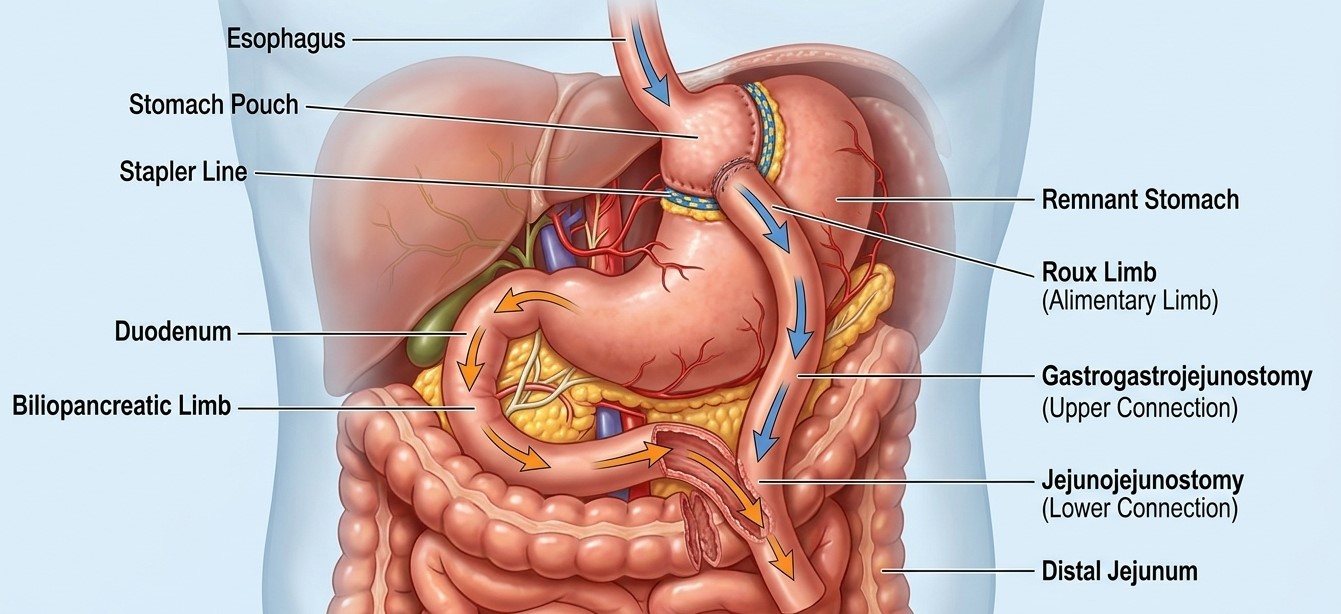
Gastric Bypass – Roux-en-Y Gastric Bypass (RYGB)
Surgical solutions for complex hepatic pathologies
Procedure Overview
Roux-en-Y Gastric Bypass (RYGB) is a well-established bariatric surgery that helps achieve significant and sustained weight loss while improving obesity-related health conditions.
During the procedure, the surgeon creates a small pouch from the upper part of the stomach and connects it directly to a section of the small intestine. This reduces the amount of food the patient can eat at one time and alters nutrient flow through the digestive system.
RYGB is performed using minimally invasive laparoscopic techniques in suitable patients, with a focus on patient safety, effective weight management, and long-term metabolic health.
Key Benefits
- Significant and sustained weight loss
- Improvement in obesity-related medical conditions
- Strong metabolic benefits, particularly for Type 2 diabetes
- Helps improve quality of life and physical mobility
- Can provide long-term support for weight management
Conditions Addressed
Severe Obesity
Provides an effective surgical option for eligible patients with severe obesity when lifestyle and medical treatment have not achieved sufficient weight loss.
High Blood Pressure
Sustained weight loss may contribute to improved blood pressure and cardiovascular health.
Type 2 Diabetes
Can produce significant improvement in blood glucose control and may lead to diabetes remission in some patients.
Obstructive Sleep Apnea
Weight loss following surgery may help reduce the severity of obesity-related sleep apnea.